
Industrial Plug & Socket
Industrial plugs and sockets are electrical devices designed for use in industrial settings to provide power connections in a safe and reliable manner. These devices are built to withstand harsh conditions and are engineered to meet the specific demands of industrial environments. Industrial plugs and sockets are commonly used in factories, construction sites, workshops, and other industrial applications.
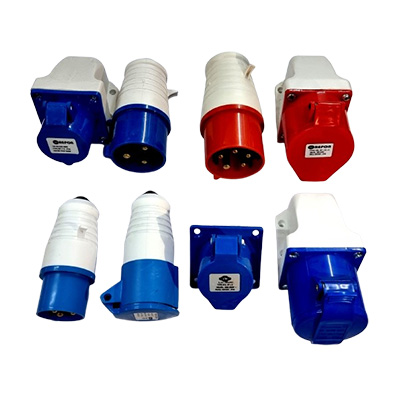
Features:
-
Robust Construction: Industrial plugs and sockets are built with durable materials such as high-impact thermoplastics or metals to withstand heavy use and harsh environmental conditions.
-
IP Ratings: They often have high Ingress Protection (IP) ratings to provide protection against dust, dirt, moisture, and other environmental factors. Common IP ratings for industrial plugs and sockets include IP44, IP54, IP66, and IP67.
-
Current and Voltage Ratings: Industrial plugs and sockets are available in various current and voltage ratings to accommodate the power requirements of different machinery and equipment.
-
Locking Mechanisms: Many industrial connectors feature locking mechanisms to ensure a secure and stable connection. This helps prevent accidental disconnection due to vibrations or other external forces.
-
Color Coding: Color-coded designs are often used to distinguish between different voltage levels or phases, enhancing safety and preventing incorrect connections.
-
Variety of Configurations: Industrial plugs and sockets come in a variety of configurations, including single-phase and three-phase options. They may have different numbers of poles and pins to match specific electrical systems.
-
Compliance with Standards: These devices are typically designed and manufactured in compliance with international standards and regulations, ensuring safety and interoperability.
-
Weather Resistance: Outdoor industrial plugs and sockets are designed to resist weather conditions, making them suitable for use in exposed outdoor environments.
-
ATEX Certification: In certain industries such as petrochemical and mining, industrial plugs and sockets may have ATEX certification, indicating compliance with standards for use in potentially explosive atmospheres.

Commonly used in Europe, CEE industrial connectors are known for their standardized design and compatibility.
Enquire Now

Widely used in North America, NEMA industrial connectors follow standards established by the National Electrical Manufacturers Association (NEMA).
Enquire Now

Designed according to British Standards, these connectors are commonly used in the United Kingdom.
Enquire Now

Following standards set by the International Electrotechnical Commission (IEC), these connectors are used globally.
Enquire Now
The specific type of industrial plug and socket required depends on factors such as regional standards, voltage requirements, and the intended application. Users should always adhere to safety guidelines and regulations when working with electrical equipment.
Enquire Now